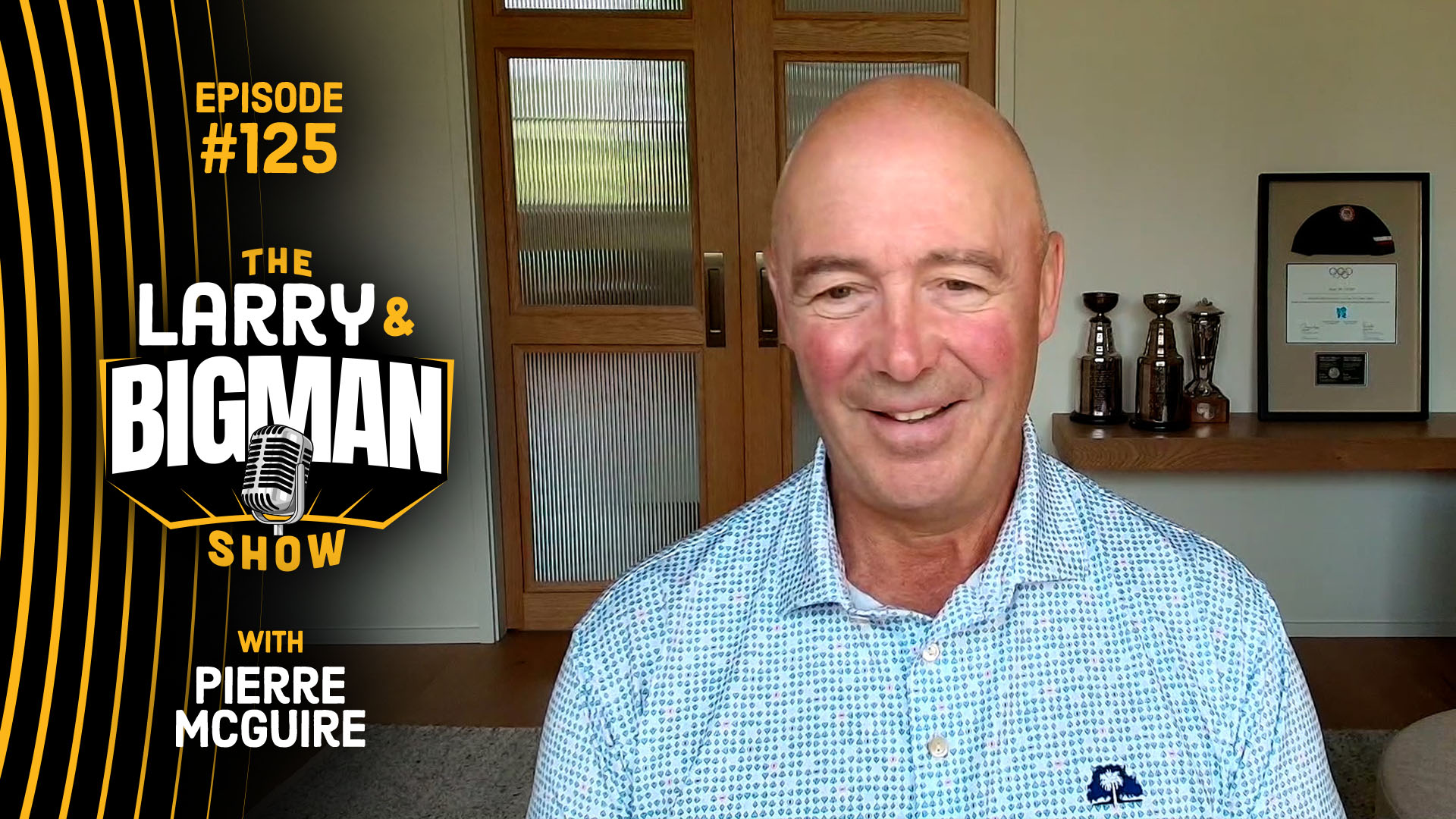


There are hockey stories that celebrate goals, trophies, and big moments. Then there are conversations that reveal what was really happening underneath it all. That is where this episode of Inside the Game with Pierre McGuire stands out.
Pierre sits down with Pittsburgh Penguins legend Kevin Stevens for a conversation that goes far beyond the scoresheet. Stevens was one of the most dominant power forwards of his era, a two time Stanley Cup champion, Olympian, Boston College star, and now a member of the U.S. Hockey Hall of Fame. But this episode is not just about what he accomplished. It is about what he learned, what he endured, and what still matters most to him today.
From the opening moments, Stevens comes across exactly the way so many teammates and fans remember him. Honest, funny, competitive, and deeply connected to the game. He talks about his current role scouting players, his love for Boston College hockey, and the energy he still gets from being around rinks and teams. You can hear that hockey has never really left him. It is still part of how he sees the world.
One of the most fascinating parts of the conversation is Stevens reflecting on the culture inside those great Penguins teams of the early 1990s. When people look back at championship teams, they often focus on talent first. And yes, Pittsburgh had elite talent with names like Mario Lemieux, Jaromir Jagr, Bryan Trottier, and Ron Francis. But Stevens makes it clear that talent alone does not win at the highest level.
What made those teams different was belief, shared purpose, and the relationships inside the room.
He describes the intensity of competing every day with teammates who pushed one another relentlessly. He talks about how those teams handled adversity, including playoff deficits against Boston and Washington, and how belief became part of their identity. There is a revealing honesty in the way Stevens explains it. Winning was never automatic. It came from a group that trusted each other, challenged each other, and genuinely loved being together.
That idea sits right at the heart of Inside the Game. Great teams are not built only through systems or skill. They are built through character, chemistry, and the standards players hold each other to when no one else is in the room.
Stevens also offers tremendous insight into leadership. Pierre points to him as one of the emotional tone setters on those Penguins teams, the kind of player whose energy could affect everyone else in practice and in games. Stevens does not frame it in a flashy way. Instead, he describes it simply. He loved going to the rink. He loved being around his teammates. He loved competing. That daily passion became contagious.
It is a great reminder that leadership is not always loud speeches or titles. Sometimes it is consistency. Sometimes it is joy. Sometimes it is the way one player walks into the room ready to work and brings everyone with him.
The episode also features thoughtful reflections on some of the most important figures in Stevens’ hockey life. He speaks warmly about Mario Lemieux and the loyalty Mario showed him through difficult seasons in his life. He shares appreciation for Badger Bob Johnson, whose positivity and emotional intelligence left a lasting impact on the Penguins. He talks about Scotty Bowman’s brilliance, Bryan Trottier’s presence, Brian Leetch’s greatness, and Craig Patrick’s underappreciated role in building a championship roster.
These sections are gold for hockey fans because they give texture to the names and eras people think they already understand. You get a clearer picture of how those teams functioned and why they succeeded.
But what makes this episode especially powerful is the way Stevens opens up about his personal life off the ice.
In one of the most meaningful segments of the conversation, he speaks candidly about addiction, recovery, and the long road it took to rebuild his life. There is no sugarcoating in the way he tells it. He talks about how little he understood addiction when it first entered his life, how painful the journey became, and how long it took to reach sobriety. It is one of the most vulnerable and impactful moments the show has featured.
Stevens shares that he has now been sober for nearly 14 years, but he is equally honest about the fact that the road there was long and hard. That honesty gives real weight to everything he says next.
He explains the work he and his sister Kelly are doing through Power Forward 25, a foundation designed to help people transitioning out of treatment and into sober living environments. It is a mission with real purpose because it addresses one of the most difficult parts of recovery, what happens after treatment ends. Stevens knows from experience that support, structure, and community are essential. Through the foundation, he is now helping others find a path forward.
It is impossible to listen to that part of the episode and not be moved. More importantly, it is impossible not to see the bigger picture. Stevens’ story is not only about redemption. It is about responsibility. He has chosen to use his experience to help other people survive and recover. That kind of leadership matters every bit as much as what he did on the ice.
Late in the episode, Pierre asks Stevens what he would say to a young person who is struggling. His answer is simple and direct. Tell someone. Ask for help before it is too late. It is the kind of advice that feels small when written on a page, but enormous when spoken by someone who has lived every part of it.
That is what makes this conversation so memorable. It is a hockey episode, absolutely. There are great stories about the Penguins, playoff comebacks, locker room dynamics, and legendary teammates. But underneath all of it is something deeper. It is a conversation about identity, resilience, and the kind of relationships that can carry people through both championships and crisis.
Kevin Stevens has seen the highest highs the sport can offer. He has also gone through some of the hardest personal battles imaginable. In this episode, he brings both sides of that journey to the table. The result is one of the most human and meaningful episodes of Inside the Game with Pierre McGuire so far.
For hockey fans, it is a rich look inside one of the great championship eras in Penguins history. For anyone interested in leadership, recovery, and personal growth, it is something even more valuable.
This is not just a conversation about the game. It is a conversation about what the game can teach us when the lights are off and the real work begins.