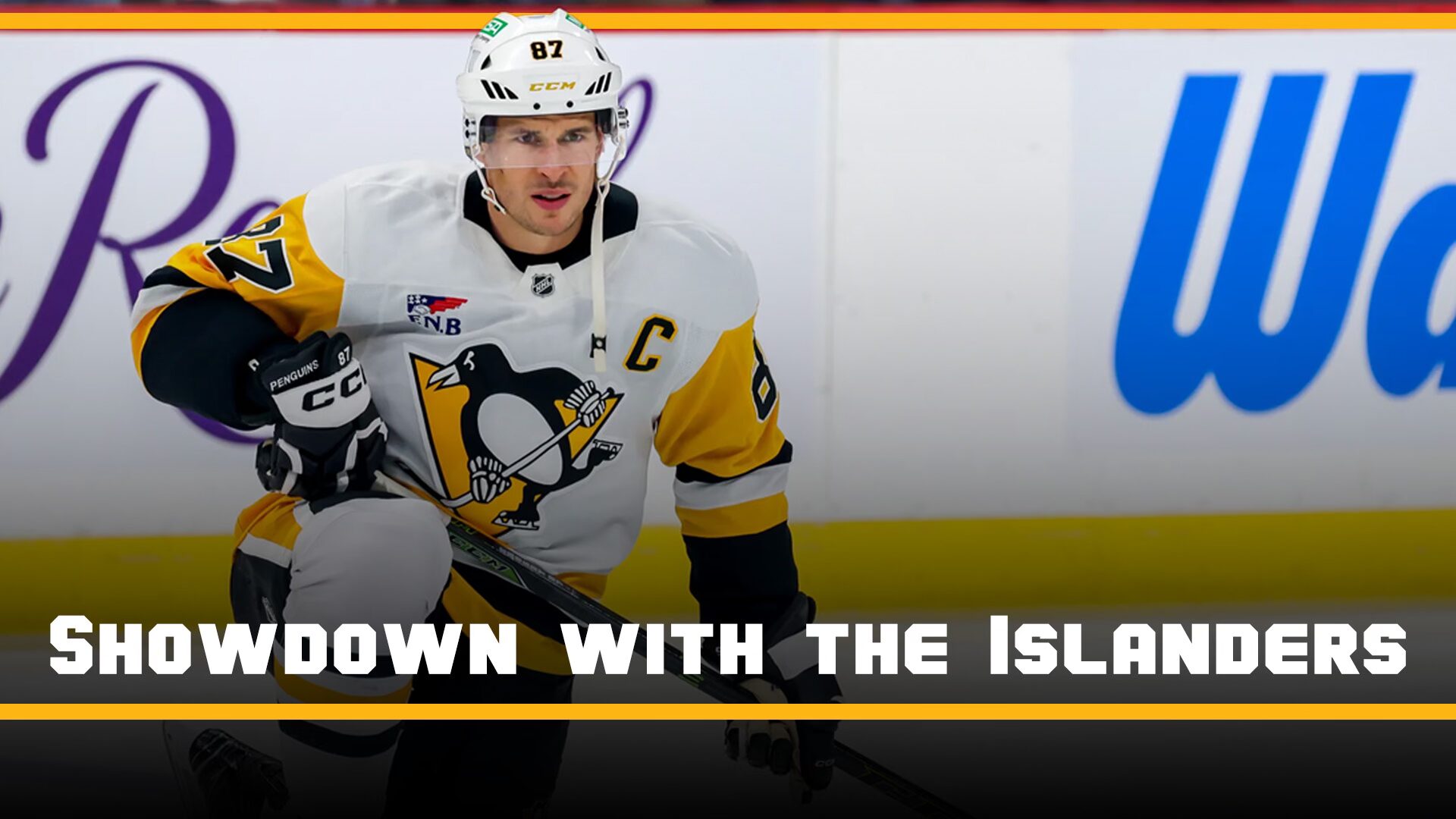

The Penguins have looked like a juggernaut since Christmas. The vibes have been right. The standings have been kind. The math has started to scream playoff team. Then the last four periods happened.
The real question. Rut or regression
The conversation starts with a blunt assessment. Pittsburgh’s level has dipped.
They were sloppy in Vancouver. Brutal against Ottawa. And the wins in between came against teams the Penguins should beat. Josh’s point is simple. A team can still win games while its overall play quietly slides. And when the schedule gets heavy, bad habits show up fast.
Joe calls the Ottawa game the worst of 2026. Josh agrees it was one of the worst of the season, and that the “loser point” felt generous.
The group lands on a reasonable middle ground. One ugly stretch is forgivable. But the next game, Islanders in a divisional race, tells you whether this is a blip or something that needs real correction.
Rust matters. Crosby looked human. And that is the scary part
One of the most interesting threads is how much the Penguins appear to need Brian Rust next to Sidney Crosby. The idea of trading Rust gets mocked for a reason. His presence steadies the top line, and his absence seems to have finally caught up with the group.
They also do something Penguins fans rarely do comfortably. They admit Crosby looked off. Like, truly off. Bad passes. No rhythm. Not himself.
The tone is not “Sid is washed.” It is more like “this is what it looks like when the engine coughs.” And when Sid and Erik Karlsson are both below their standard on the same night, everything feels shakier, even if the score stays close.
The goal that set everyone on fire
Most episodes like this have a moment where the emotion boils over. Here it is the controversial Ottawa goal involving goaltender interference, a shove of the pad, and the usual NHL fog machine around what is and is not allowed.
They argue about what it should have been. Penalty shot versus goal. Whether the puck truly crossed. Whether the league protects goalies or only says it does.
Then they zoom out to the bigger issue. The league’s lack of consistency is the real problem. Nobody can define goalie interference. Nobody can explain headshots with any confidence. And coaches are left trying to teach players rules that change based on the night, the building, and who is involved.
That turns into a comparison that stings because it feels true. The Penguins do not get the same whistle other teams get. Whether that is conspiracy or coincidence, the frustration is real, and the episode captures it perfectly.
Why the bottom six and the fourth line debate matters
There is also a sneaky important hockey point buried in the anger.
Josh suggests the fourth line might be playing a little too much. Not because they have been bad. Because they have been good, and overuse can cool off any energy line, especially with a compressed schedule.
It is that classic hockey management tension. Ride what is working. But do not burn it out. Especially when you are going to need the big boys late in games, on the road, and in the playoffs.
They connect it to a larger reality. This Penguins team is at its best five on five, structured, and buttoned down. Not in wide open four on four chaos the way older versions of the team once thrived.
The deadline truth. One more right handed defenceman would change the ceiling
Even with how well the Penguins have played, they keep circling back to the same roster question.
Do they have six good NHL defencemen for a playoff run.
The answer in this conversation is basically “not quite.”
With injuries piling up and the right side thin, they talk about the Penguins needing another right shot defender, ideally someone sturdy, mean enough to clear the crease, and reliable enough that Connor Clifton becomes more of a number seven option than a nightly necessity.
Names get thrown around. Justin Faulk. Connor Murphy. Colton Parayko as the dream scenario. The point is not which name. The point is that one solid add could stabilise everything behind Karlsson and Letang, and raise the team’s playoff ceiling without selling the farm.
They also mention the timing pressure. A roster freeze tied to the Olympic break means the front office window tightens. It is a reminder that the next day or two could matter more than fans realise.
The 2016 reunion. Crosby crying. And why it hit so hard
The episode takes a turn from anger into something genuinely moving.
They talk about the 2016 Cup reunion ceremony, and the moment where Crosby was visibly emotional on the ice. Josh explains something that long time watchers already sense. Crosby is not nostalgic. He does not relive highlights. He stays in routine. Always forward.
Which is why seeing him crack in that moment felt different.
It was not performance. It was human. Standing with old teammates, with Fleury around, and a decade of history sitting in one place at once. It was a reminder that the Crosby era is not just a timeline. It is an identity for a whole city.
They even get into the debate of which Cup meant the most. The case for 2016 is strong because it erased the “one hit wonder” talk and validated the core after some brutal playoff failures earlier in the decade.
The road ahead. Islanders. Buffalo. And the fear of the break
The closing stretch circles back to the immediate problem.
Win tonight on Long Island and the Ottawa mess starts to feel like a bad night. Lose again and suddenly the Olympic break becomes a three week anxiety spiral.
They talk about Buffalo being hot, the Penguins struggling there at times, and the March schedule looming like a wall. The consensus is pragmatic.
Give me three out of four points in the next two games. Sign it in blood.
But there is also an undercurrent fans will recognise. The fear that a break could cool off chemistry, momentum, and confidence. Especially with Geno’s shoulder clearly bothering him, and the Penguins relying on a few key connections that feel fragile if the rhythm disappears.